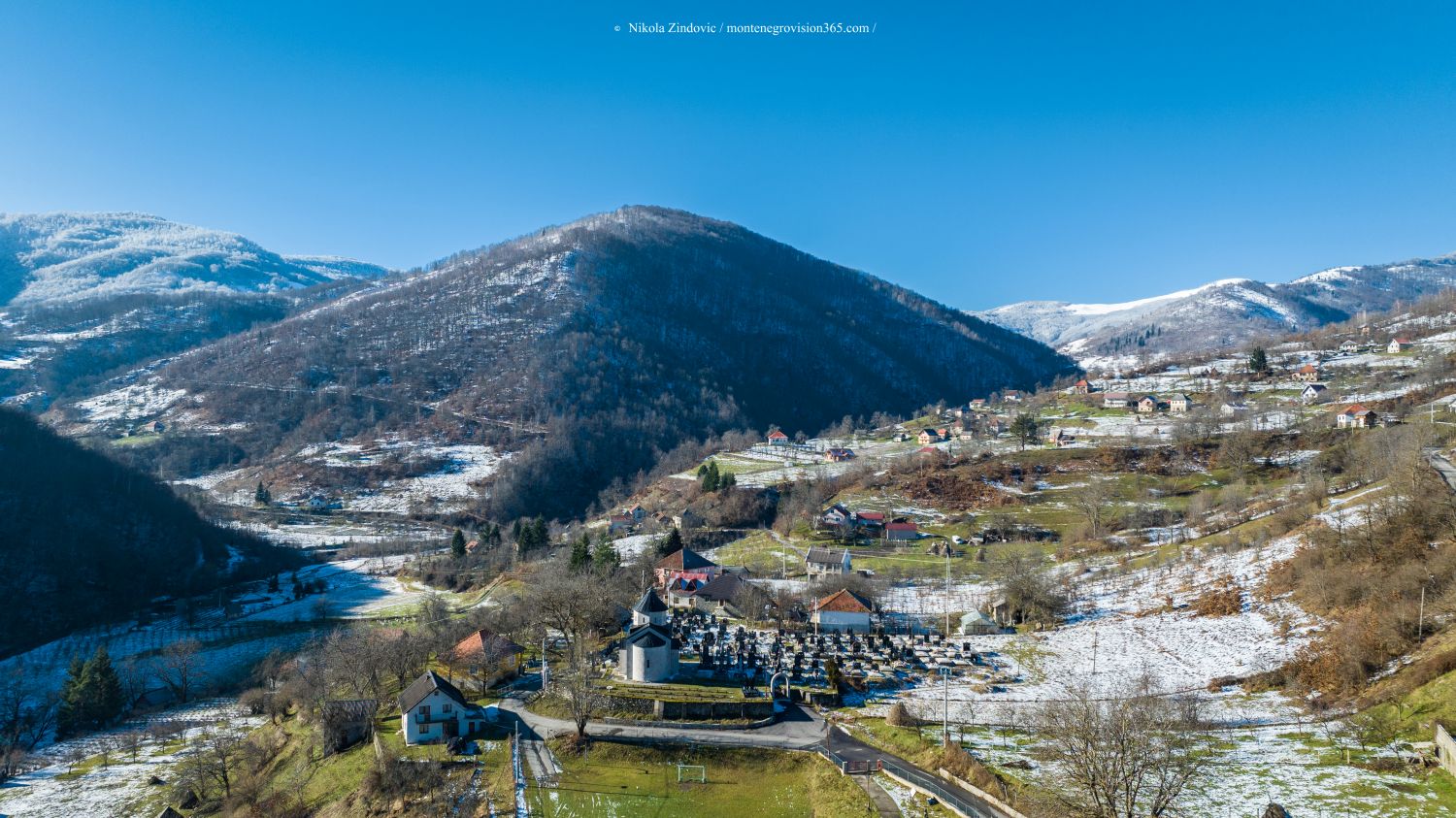
Kralje is one of the most famous and historically significant villages in Podkom, located in the municipality of Andrijevica, in the region of Vasojevića in the north-east of Montenegro.
Historical significance and lore of the name
The village has a rich tradition and deep roots in the folklore of Vasojević:
Capital and royal name: According to folklore, the village got its name because a ruler/king used to stay or dine there (often in legends it is connected to the era of Nemanjić or old local princes).
Gathering place: Throughout history, Kralje has been an important spiritual and social gathering place in Gornji Polimlje. Village assemblies were held in it and important decisions were made for the Vasojević tribe.
Cultural heritage: In the village there is a memorial house and a bust dedicated to Mojsi Zečević (1780–1850), abbot of the Đurđevi Stupovi monastery and one of the most significant historical figures of this region, who played a key role in unifying Vasojević and maintaining ties with Njegoš's Montenegro.
Geography and nature
Location: The village is located at the foot of the Komovo mountain massif, along the regional road that connects Andrijevica with Mateševo and Kolasin (via the Trešnjevik pass).
Ambience: It is surrounded by lush forests, spacious meadows and pastures, and crystal clear mountain streams. Thanks to the proximity of Komovo, the landscape has exceptional natural beauty.
Life and population
Tradition and surnames: Kralje is home to several indigenous and well-known Vasojevic brotherhoods. Throughout history, many famous priests, teachers, dukes and intellectuals came from this village.
Agriculture and tourism: Households are traditionally engaged in animal husbandry, fruit growing (growing plums, apples) and beekeeping. In recent years, due to the proximity of the Nature Park "Komovi" and hiking routes through Trešnjevik, the village has been slowly developing rural and eco-tourism.