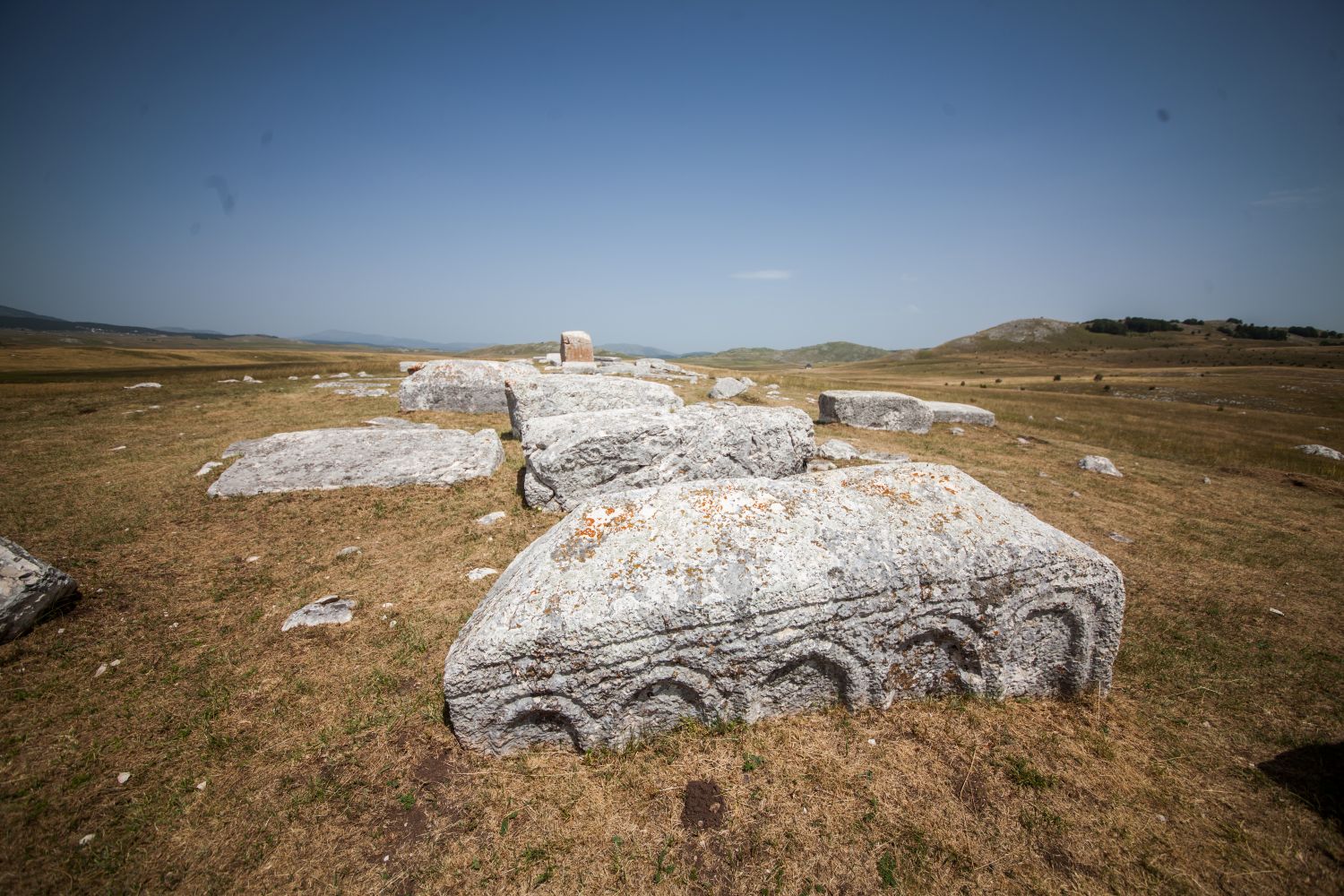
The stećak necropolis in Bara Žugića (in the hamlet of Novakovići, not far from Žabljak and Riblje Jezera) is one of the most important archaeological and cultural-historical sites in the Durmitor area. Due to its exceptional value, this necropolis was included in the UNESCO World Cultural Heritage List in 2016, together with the neighboring "Greek Cemetery" and the necropolis in Piva. Here are the most important facts about these stećaks: 1. Number and types of monuments The largest necropolis in the area: With about 300 stećaks (of which about 240 are laid slabs, 50 chests and 10 gables/sarcophagi), this is the most numerous necropolis of medieval stone monuments in the area of Durmitor and the entire Jezerska plateau. The monuments are carved from local limestone, formed on a slightly elevated terrain, from which there is a view of the Durmitor peaks. 2. Creation period and historical context The necropolis was created in the period from the 14th to the first half of the 15th century. It is assumed that members of the nobility of Drobnjak and residents of the Jezerska plateau, which in the late Middle Ages were densely populated and had a stable and tribal structure, were buried in this place. 3. Decorations and symbolism Although many stećci are amorphous or, due to the ravages of time, without visible decorations, over 20 monuments have preserved exceptional relief motifs: Religious and ornamental symbols: Stylized crosses, rosettes, circles, borders and vines with trefoils. Nature and hunting motifs: Depicts of deer, swords, bows and arrows, and even depictions of hunting and fighting. 4. Connection with the "Greek Cemetery" Only 2 to 3 kilometers away is another well-known necropolis — the Greek Cemetery near Fish Lake. Popularly, the term "Greek cemetery" was often used for old necropolises whose origins have been forgotten over time in folklore, although they are in fact Christian medieval cemeteries. 5. Today's situation Stećci in Bara Žugića are located right next to the local road, just across the street from the village church and the local cemetery. Most of the monuments are slightly tilted or sunk into the ground under the influence of time, snow and subsidence of the earth, and many are covered with characteristic moss and lichen, which gives them a special, mystical appearance.